When embarking on a journey toward fat loss or muscle gain, it’s essential to grasp the concept of calories. At its core, a calorie is a unit of energy that your body requires to function. Every activity you engage in, from breathing to exercising, consumes calories.
Understanding this fundamental principle is crucial because it sets the stage for how you approach your diet and exercise regimen. You might find it helpful to think of calories as the fuel for your body’s engine; just as a car needs gasoline to run, your body needs calories to perform its daily functions. In the context of fat loss and muscle gain, the balance of calories consumed versus calories burned plays a pivotal role.
To lose fat, you need to create a caloric deficit, meaning you consume fewer calories than your body expends. Conversely, if your goal is to gain muscle, you should aim for a caloric surplus, where you consume more calories than you burn. This balance is not just about numbers; it’s about understanding how your body responds to different caloric intakes and how those intakes affect your overall composition.
By recognizing the role of calories in your fitness journey, you can make informed decisions that align with your goals.
Key Takeaways
- Understanding Calories: Calories play a crucial role in fat loss and muscle gain, as they determine the energy balance in the body.
- Calculating Daily Caloric Needs: It’s important to calculate your daily caloric needs based on your goals for fat loss or muscle gain, using formulas and activity levels.
- Importance of Macronutrient Distribution: The distribution of macronutrients in your caloric intake, such as carbohydrates, proteins, and fats, is essential for achieving your desired body composition.
- Choosing the Right Foods: Selecting nutrient-dense foods that support fat loss and muscle gain, such as lean proteins, whole grains, and healthy fats, is key for success.
- Utilizing Exercise: Exercise is crucial for supporting caloric balance and muscle growth, so incorporating a combination of resistance training and cardiovascular exercise is important.
Calculating Your Daily Caloric Needs for Fat Loss and Muscle Gain
To effectively manage your caloric intake, you first need to calculate your daily caloric needs. This process begins with determining your Basal Metabolic Rate (BMR), which represents the number of calories your body requires at rest to maintain basic physiological functions. You can use various online calculators or formulas, such as the Mifflin-St Jeor equation, to estimate your BMR based on factors like age, gender, weight, and height.
Once you have this figure, you can adjust it based on your activity level to find your Total Daily Energy Expenditure (TDEE). Understanding your TDEE is crucial because it serves as a benchmark for how many calories you should consume daily. If your goal is fat loss, you’ll want to create a deficit of about 500 calories per day, which can lead to approximately one pound of weight loss per week.
On the other hand, if muscle gain is your objective, you might aim for a surplus of around 250-500 calories daily. It’s important to remember that these numbers are starting points; individual variations exist based on metabolism, activity levels, and personal goals. By accurately calculating your caloric needs, you set yourself up for success in achieving your desired body composition.
The Importance of Macronutrient Distribution in Caloric Intake

While understanding calories is vital, equally important is the distribution of macronutrients within those calories. Macronutrients—proteins, carbohydrates, and fats—each play unique roles in your body and contribute differently to fat loss and muscle gain. As you plan your diet, consider how each macronutrient supports your goals.
For instance, protein is essential for muscle repair and growth, while carbohydrates provide the energy needed for intense workouts. Fats are also crucial for hormone production and overall health. A balanced macronutrient distribution can enhance your results significantly.
For muscle gain, a common recommendation is to consume around 30% of your total calories from protein, 50% from carbohydrates, and 20% from fats. This ratio can vary based on individual preferences and dietary restrictions but serves as a solid foundation. For fat loss, increasing protein intake can help preserve lean muscle mass while in a caloric deficit.
Adjusting your macronutrient ratios according to your specific goals will not only support your physical changes but also improve your overall well-being.
Choosing the Right Foods to Support Fat Loss and Muscle Gain
The quality of the foods you choose plays a significant role in achieving fat loss and muscle gain. While counting calories is important, focusing on nutrient-dense foods can enhance your results and overall health. Whole foods such as lean meats, fish, eggs, legumes, whole grains, fruits, and vegetables should form the cornerstone of your diet.
These foods are not only rich in essential nutrients but also help keep you satiated longer, making it easier to adhere to your caloric goals. Incorporating a variety of foods into your diet can also prevent boredom and ensure that you receive a broad spectrum of vitamins and minerals necessary for optimal performance and recovery. For instance, lean proteins like chicken or turkey can support muscle growth, while complex carbohydrates like quinoa or brown rice provide sustained energy for workouts.
Healthy fats from sources like avocados or nuts can aid in hormone regulation and overall health. By making conscious food choices that align with your caloric needs and macronutrient distribution, you set yourself up for success in both fat loss and muscle gain.
Utilizing Exercise to Support Caloric Balance and Muscle Growth
Exercise is a powerful tool in managing caloric balance and promoting muscle growth. Engaging in regular physical activity not only helps burn calories but also stimulates muscle hypertrophy when combined with proper nutrition. Resistance training is particularly effective for building muscle mass; it creates micro-tears in muscle fibers that repair stronger over time.
Incorporating compound movements like squats, deadlifts, and bench presses can maximize muscle engagement and caloric expenditure. In addition to resistance training, incorporating cardiovascular exercise can further support your goals. Cardio helps increase caloric burn and can be particularly beneficial during fat loss phases.
However, it’s essential to strike a balance between cardio and strength training; too much cardio can hinder muscle growth if not paired with adequate nutrition. By creating a well-rounded exercise routine that includes both strength training and cardiovascular work, you can effectively manage your caloric balance while promoting muscle growth.
Monitoring and Adjusting Caloric Intake for Optimal Fat Loss and Muscle Gain
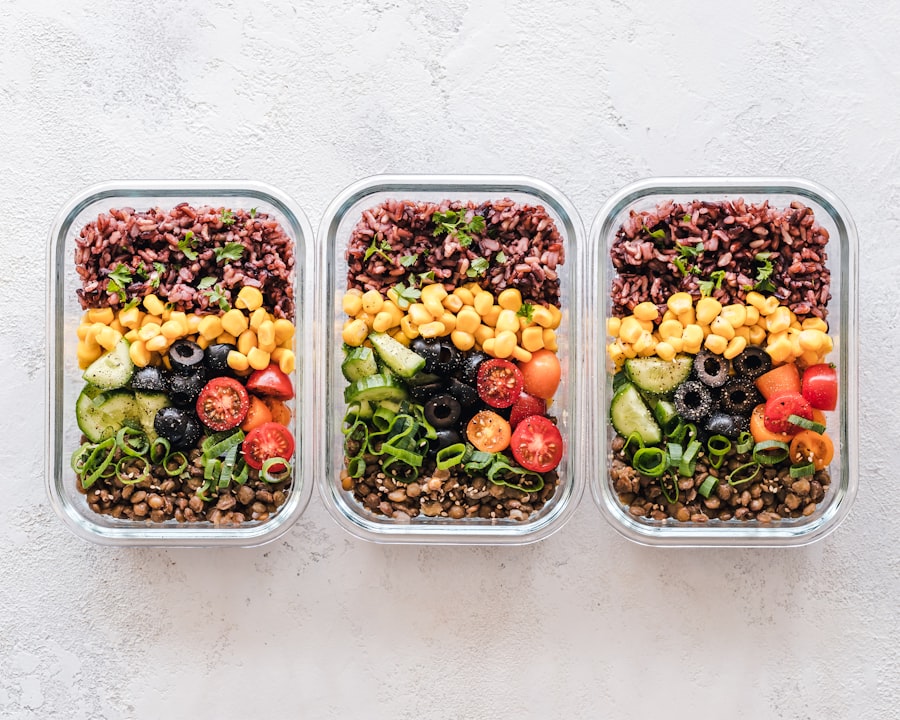
As you progress on your fitness journey, monitoring your caloric intake becomes crucial for achieving optimal results. Regularly tracking what you eat can provide insights into whether you’re meeting your caloric goals or if adjustments are necessary. Many people find success using apps or journals to log their food intake; this practice not only helps maintain accountability but also allows you to identify patterns in your eating habits.
If you find that you’re not seeing the desired results after several weeks of consistent effort, it may be time to reassess your caloric intake. For fat loss, ensure that you’re maintaining a sufficient deficit without going too low on calories, which can lead to muscle loss and metabolic slowdown. For muscle gain, if you’re not seeing progress after increasing calories, consider adjusting macronutrient ratios or incorporating more nutrient-dense foods into your diet.
Regularly evaluating and adjusting your caloric intake based on progress will help keep you on track toward achieving your goals.
The Role of Protein in Caloric Intake for Muscle Growth and Recovery
Protein is often hailed as the cornerstone of any successful muscle-building program. When it comes to caloric intake for muscle growth, ensuring adequate protein consumption is non-negotiable. Protein provides the building blocks—amino acids—that are essential for repairing and building muscle tissue after workouts.
As a general guideline, aiming for about 1.6 to 2.2 grams of protein per kilogram of body weight can support optimal muscle growth. In addition to promoting muscle synthesis, protein plays a vital role in recovery post-exercise. Consuming protein-rich foods or supplements after workouts can enhance recovery by reducing muscle soreness and promoting faster healing of micro-tears caused by resistance training.
Incorporating sources like chicken breast, fish, eggs, dairy products, legumes, or plant-based protein powders into your meals will ensure that you’re meeting your protein needs effectively. By prioritizing protein in your caloric intake, you set the stage for significant gains in muscle mass while supporting recovery.
The Impact of Sleep and Stress on Caloric Balance and Body Composition
While diet and exercise are critical components of fat loss and muscle gain, factors like sleep and stress often go overlooked yet play significant roles in achieving optimal body composition. Quality sleep is essential for recovery; during sleep, the body repairs tissues and regulates hormones related to hunger and metabolism. Insufficient sleep can lead to increased cravings for unhealthy foods and decreased motivation to exercise—two factors that can derail even the most dedicated fitness enthusiasts.
Stress management is equally important; chronic stress can lead to hormonal imbalances that promote fat storage and hinder muscle growth. Finding effective ways to manage stress—whether through mindfulness practices like meditation or engaging in hobbies—can positively impact both mental well-being and physical results. Prioritizing sleep hygiene by establishing a consistent sleep schedule and creating a restful environment will further support your fitness goals.
By addressing these lifestyle factors alongside diet and exercise, you create a holistic approach that enhances both fat loss and muscle gain efforts. In conclusion, understanding the intricate relationship between calories, macronutrients, exercise, sleep, and stress is vital for anyone looking to achieve fat loss or muscle gain goals effectively. By calculating your caloric needs accurately and making informed food choices while incorporating regular exercise into your routine, you set yourself up for success on this journey toward improved body composition and overall health.
If you are looking to lose fat and gain muscle, it is important to consider how hormonal imbalances can affect your progress. According to a recent article on hormonal imbalances, certain hormones can impact your ability to burn fat and build muscle effectively. In addition to managing your hormones, incorporating green tea extract into your diet can also help boost your metabolism and aid in fat loss. For specific exercises to target arm fat, check out this article on exercises to burn arm fat for effective workout routines. By addressing hormonal imbalances, incorporating green tea extract, and targeting specific muscle groups with exercises, you can optimize your fat loss and muscle gain goals.
FAQs
What are calories?
Calories are a unit of measurement used to quantify the amount of energy in food and beverages. They are essential for the body to function and perform daily activities.
How do calories affect weight loss and muscle gain?
To lose fat, you need to consume fewer calories than your body burns, creating a calorie deficit. To gain muscle, you need to consume slightly more calories than your body burns, providing the energy needed for muscle growth.
What is the recommended calorie intake for weight loss and muscle gain?
The recommended calorie intake varies depending on factors such as age, gender, weight, height, and activity level. It is best to consult with a healthcare professional or a registered dietitian to determine the appropriate calorie intake for your specific goals.
What are some high-calorie foods for muscle gain?
Foods high in protein and healthy fats, such as lean meats, fish, nuts, seeds, avocados, and dairy products, are good options for increasing calorie intake to support muscle gain.
What are some low-calorie foods for fat loss?
Fruits, vegetables, lean proteins, whole grains, and legumes are examples of low-calorie foods that can support fat loss when included in a balanced diet.
How can I track my calorie intake?
There are various methods for tracking calorie intake, including keeping a food diary, using a mobile app, or consulting with a registered dietitian. These methods can help you monitor your calorie intake and make adjustments as needed to support your goals.
Is it possible to lose fat and gain muscle at the same time?
While it is challenging to lose fat and gain muscle simultaneously, it is possible, especially for beginners or those returning to exercise after a period of inactivity. It requires a combination of proper nutrition, strength training, and cardiovascular exercise.